 How-to
9 Steps to Prepare Your House for Sale in Winter 2026
Last Updated: November 5, 2026
Quick Summary
A winter home sale needs a different plan than spring: clear safe access, make key systems and roof checks before listing, stage rooms for short daylight, and schedule photos around midday light. Building a written checklist first keeps essential items from being skipped.
- Buyers judge access and safety before they judge the kitchen.
- Treat walkways and the driveway apron before every showing, and re-treat after any refreeze.
- Clear a minimum 36-inch-wide walkway path to bare pavement or stone.
- Document past ice-dam, roof-leak, or frozen-pipe repairs and disclose known issues.
- Schedule listing photos for midday, with a backup date in case of a storm.
Table of Contents
- Why Winter Sellers Need a Different Prep Plan
- Step 1: Build a Home Selling Checklist for 2026
- Step 2: Improve Winter Curb Appeal for Homes
- Step 3: Make Walkways, Driveways, and Entries Safe for Showings
- Step 4: Make Repairs Before Listing
- Step 5: Stage the Interior for Short Winter Days
- Step 6: Schedule Listing Photos Around Winter Daylight
- Book Your Winter Listing Consultation With Coombes Group
- Frequently Asked Questions
Why Winter Sellers Need a Different Prep Plan
Winter home sale prep looks different from spring prep, and that's the first thing most sellers miss. Short days, snow, ice, and dark interiors change how buyers see a property in the first few minutes of a showing.
Winter buyers come to a showing with a different set of worries. They want to know the driveway is safe, the roof and heating are in working order, and the house feels warm and bright. The winter home sale listings that move fastest usually start with that practical groundwork.
Here is the short version of what matters most:
- Buyers judge access and safety before they judge the kitchen.
- Dark rooms make small rooms feel smaller.
- Heating, snow load, and entry conditions get checked early.
Most of the work happens before the first photo is taken. That's why the steps below are ordered the way they are.
Step 1: Build a Home Selling Checklist for 2026
Start with a written checklist that covers the exterior, interior, systems, and photography. A checklist keeps you from skipping the boring items, like the furnace filter or the gutters, that buyers notice first.
A useful 2026 checklist includes:
- Exterior: gutters, downspouts, roof condition, siding, and fencing
- Access: walkways, driveway, steps, and entry lighting
- Systems: furnace, water heater, fireplace, and any well or septic equipment
- Interior: deep clean, declutter, paint touch-ups, and window treatments
- Photography: a daylight date and a backup date
Check the current market before you set a list price. Our Home Valuation tool gives you a starting estimate, and it helps you decide whether to make repairs or sell as-is. If you want the full seller process beyond this checklist, our sellers guide walks through each stage from listing to closing.
For a fuller view of what buyers are looking at right now, you can browse current properties on the market to see how comparable homes present in winter.
Step 2: Improve Winter Curb Appeal for Homes
Curb appeal in winter is about clean lines, warm light, and clear paths. Snow that's cleared quickly and neatly tells buyers the home has been cared for. Overgrown evergreens and piles of leaves in the corners do the opposite.
Focus on the areas buyers see first:
- Clear the front walkway and driveway as completely as you can.
- Trim low branches and remove dead limbs before the first heavy snow.
- Add warm-white exterior lighting along the path and at the front door.
- Keep one entry mat and one planter with winter-hardy greenery.
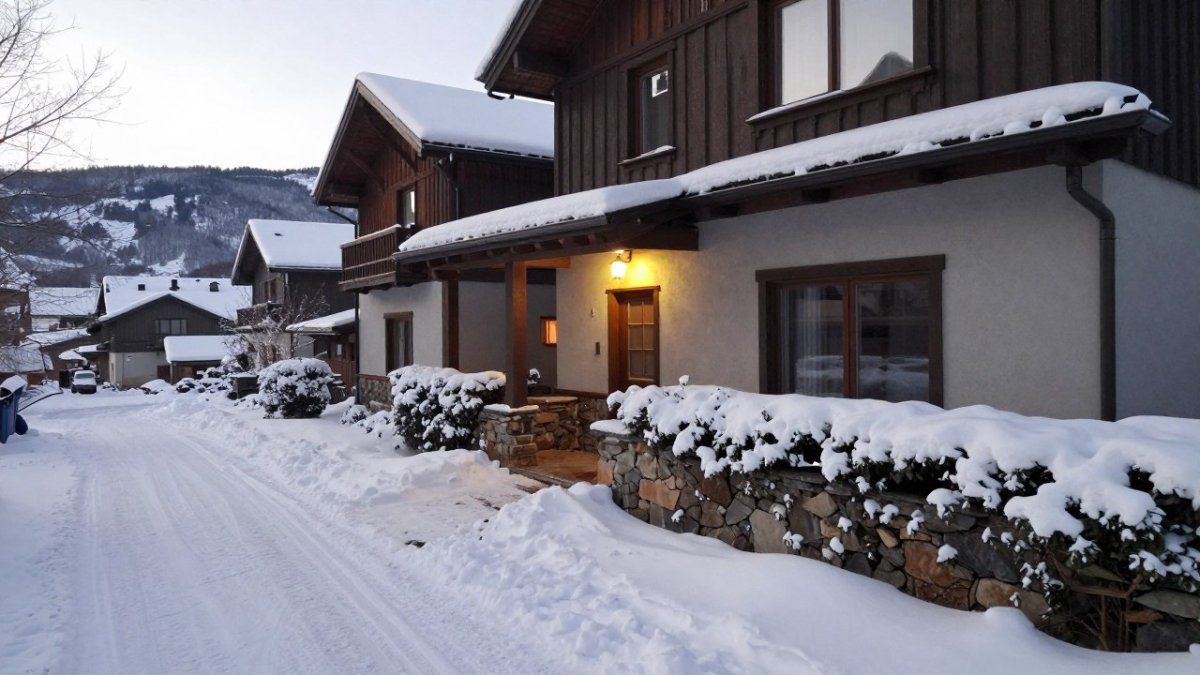
A snow-dusted mountain home with a cleared stone path and warm porch light photographs well and shows buyers the property is ready for a visit.
Step 3: Make Walkways, Driveways, and Entries Safe for Showings
Safety is the first thing a buyer or agent will check on a winter visit. Ice on the steps or an unplowed driveway can end a showing before it starts, and in a mountain market it can also create liability for the seller while the home is listed.
- Treat walkways, steps, and the driveway apron with ice melt or sand before every showing, and re-treat after any refreeze.
- Keep a snow shovel, a bucket of ice melt, and a stiff broom staged near the front door so the last person out can touch up the path.
- Repair loose handrails and add a handrail on any exterior stair that lacks one; buyers test them without thinking.
- Clear a minimum 36-inch-wide path to bare pavement or stone, and keep the path lit from the parking area to the door.
- Schedule plowing for the morning of a showing, not the day before, and confirm the plow will return if it snows again.
Snow, Ice, and Access Logistics in Incline Village
Incline Village homes often sit on steep lots with long, shaded driveways, and access can change overnight. Confirm with your plow service how quickly they can clear the driveway on showing days.
Plan for four-wheel-drive buyers and agents who may arrive from the highway in poor conditions. Keep a clear, lit path from the parking area to the front door, even after dark, and leave a printed or emailed showing note that tells agents where to park, which entrance to use, and whether the driveway is plowed.
Snow and ice responsibilities do not always end at the property line. Ask your insurance agent how a slip-and-fall claim would be handled while the home is listed, and disclose known ice-dam, roof-leak, or drainage issues in the seller's disclosures.
Winter Access and Showing Logistics
Give buyers and agents a practical plan they can follow in bad weather:
- Send a showing confirmation that includes parking instructions, the cleared entrance, and a cell number for access questions.
- Ask your agent to arrive early on storm days to re-shovel and turn on exterior lights.
- Keep a backup showing window in case a storm closes the highway or the driveway.
- Photograph the cleared path and driveway after each storm so you have a record of the condition buyers saw.
Snow Load, Roof, and Ice Dam Checks
Before the first showing, consider having the roof and gutters checked for snow load, ice dams, and clogged downspouts. Clear gutters before the snow starts, keep attic ventilation and insulation working so heat does not melt snow into ice at the eaves, and remove icicles over walkways. If the roof has leaked before, document the repair and disclose it; buyers in mountain markets ask about roof age and snow load early.
Winter access and safety checks, at a glance:
| Task | Timing | Note |
|---|---|---|
| Treat walkways and driveway apron | Before every showing | Re-treat after any refreeze |
| Clear walkway path | Minimum 36 inches wide | Clear to bare pavement or stone |
| Repair loose handrails | Before listing | Buyers test them without thinking |
| Schedule plowing | Morning of showing | Confirm plow returns if it snows again |
| Showing confirmation | Each showing | Include parking and entrance instructions |
| Photograph cleared path | After each storm | Keeps a record of conditions buyers saw |
Step 4: Make Repairs Before Listing
Winter buyers look hard at the systems that keep a mountain home running. A small repair now is often cheaper than a price cut later. Walk the house with a critical eye and fix the items a buyer's inspector is likely to flag.
Prioritize:
- Furnace service and a new filter, plus a documented service record you can show buyers.
- Sealing drafts around windows and doors, and checking attic insulation and ventilation.
- Gutters, downspouts, and ice dam prevention, including clearing debris before the snow starts.
- Smoke and carbon monoxide detectors, tested and dated.
- Any exterior cracks or loose railings, especially on stairs and decks.
- Water heater and pipe insulation in unheated spaces, and a plan for keeping the house heated during showings and vacancy.
Mountain-Home Systems and Seasonal Maintenance
In a Tahoe-area home, the systems buyers ask about first are heat, roof, pipes, fireplace, and backup power. Consider having the furnace and any boiler serviced and keeping the invoice. If the home has a wood-burning fireplace or stove, have the chimney swept and keep the receipt, and confirm whether any burn restrictions apply. Insulate exposed pipes in the garage, crawlspace, or exterior walls, and know where the water shutoff is so you can act quickly if a pipe freezes.
If the home has a generator or backup power, consider testing it before showings and keeping its maintenance record with the listing documents.
Insurance, Documentation, and Disclosures
Winter damage is a disclosure issue as much as a repair issue. Document any past ice-dam, roof-leak, or frozen-pipe repair with photos and invoices, and disclose known issues in the seller's disclosures rather than waiting for an inspector to find them. Ask your insurance agent how the policy handles a vacant home, a slip-and-fall claim during showings, and any winter damage that occurs while the home is listed.
Some improvements in the Tahoe area are limited by land-use rules, so check with the local planning office before you add decks, sheds, or new coverage. Our article on TRPA coverage restrictions and resale value in Incline Village explains how those rules can shape what's worth changing before a sale. For a broader look at which repairs pay off in the Tahoe market, read our 2026 luxury Tahoe seller's guide.
Avoid making a major repair in the week before photos without a backup plan, since contractors can run behind in winter.
Step 5: Stage the Interior for Short Winter Days
Winter daylight is limited, so interior staging should make rooms feel open and warm. Start by turning on every light before a showing.
- Open all blinds and curtains during the day.
- Clear countertops and surfaces to make rooms look larger.
- Use neutral throws and a few indoor plants for a warm feel.
- Light the fireplace before showings if it works well.
- Keep the thermostat at a comfortable temperature so buyers don't rush through the house.
Consider deep-cleaning the kitchen, bathrooms, and entry first, since these rooms make a strong first impression.
Step 6: Schedule Listing Photos Around Winter Daylight
Photos are often the first look buyers get, and winter light changes fast. Consider scheduling the shoot for midday when the sun is highest.
- Book the photographer for the brightest part of the day.
- Turn on all interior lights and open every shade.
- Shoot exteriors when the snow is fresh and the walkways are clear.
- Keep a backup date in case of a storm.
Ask your photographer to capture the home's winter features, such as a stone fireplace or a covered deck, so buyers see what the property offers in season.
Book Your Winter Listing Consultation With Coombes Group
Winter listings reward sellers who plan early, prepare the access and systems, and time the photos to the light. If you're getting ready to list in the coming months, Coombes Group can help you talk through pricing, repairs, and timing. Contact us to get started.
Frequently Asked Questions
How do I prepare my house for sale in winter?
Start with access and safety: clear snow and ice from the driveway, walkways, and entry, and keep those areas clear through every showing. Next, complete a home selling checklist for 2026 that covers minor repairs, a deep clean, and decluttering. Inside, use lamps and interior lighting to offset short days, and keep the thermostat at a comfortable level so buyers feel welcome. Schedule listing photos during the brightest part of the day, when daylight is strongest. Contact Coombes Group to discuss your options.
What should I fix before selling my house in 2026?
Focus on repairs buyers notice during a winter showing: leaking faucets, sticky doors, burned-out bulbs, damaged gutters, loose handrails on entry steps, and any heating system concern. Make a list, get quotes from licensed contractors, and prioritize items that affect safety or a buyer's first impression. Fixing small problems before listing usually costs less than a price concession later, though actual costs depend on the scope of work, your property, and local labor. Contact Coombes Group to discuss your options.
Should I stage my home differently for a winter sale?
Yes. Winter staging should emphasize warmth and light. Use layered lighting, warm throws and neutral textiles, and a few indoor plants for greenery. Keep fireplaces clean and ready to use, and remove heavy winter gear from entries so buyers can see the space. Avoid cluttered countertops and stacked boxes, which make rooms look smaller. Staging an entire home is not required; prioritizing the living room, primary bedroom, and kitchen is often enough to make a strong impression.
How should I price a home for a winter sale in Incline Village?
Pricing should reflect current comparable sales, inventory levels, and buyer demand rather than a fixed seasonal discount or premium. Winter activity in Incline Village can be slower, but well-prepared listings with clear access and strong photos still attract serious buyers. Contact Coombes Group to discuss your property's valuation. Accurate pricing from the start helps reduce time on market.